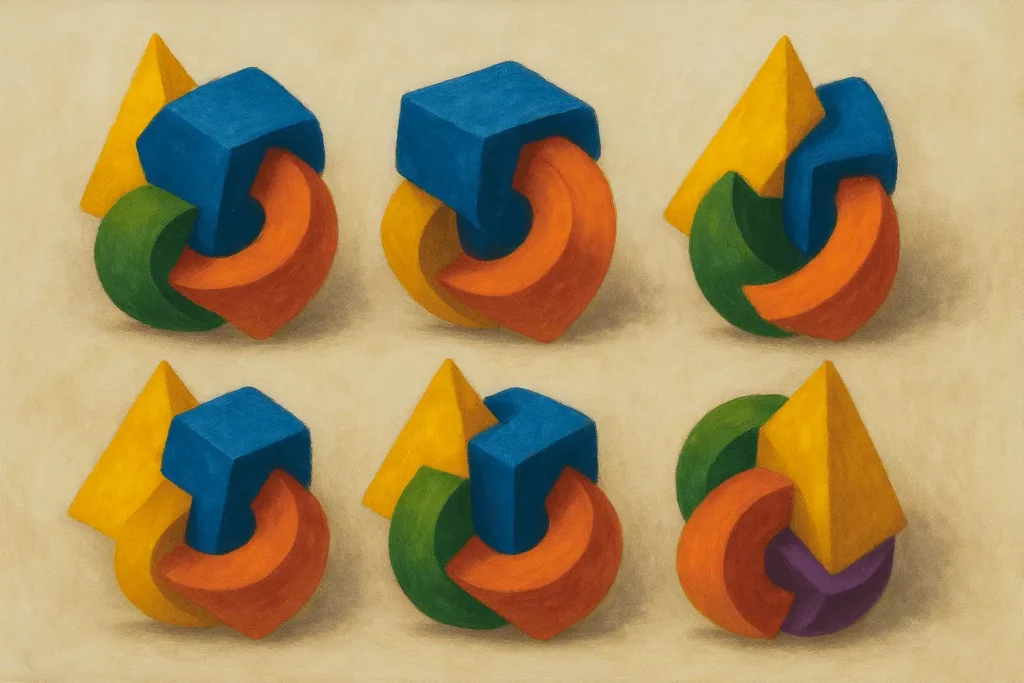
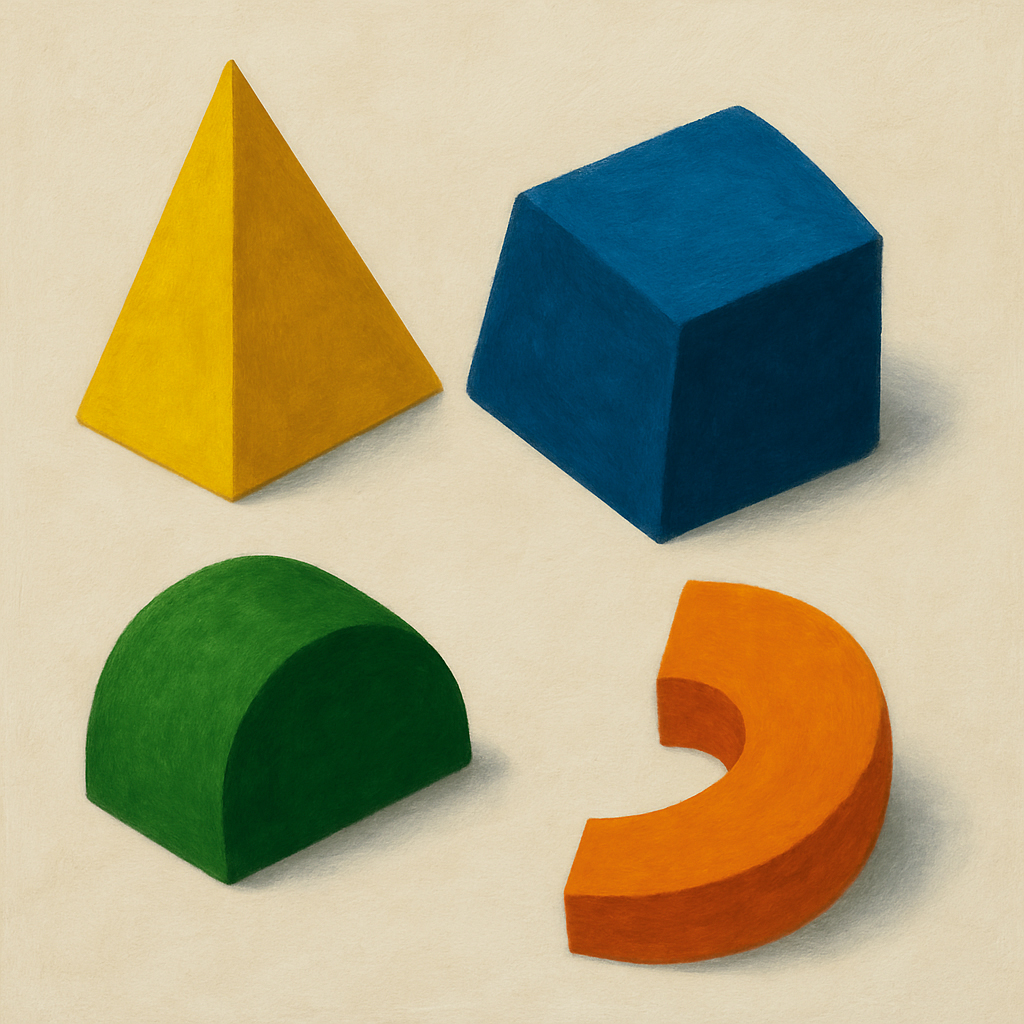
In the Apple TV series SEVERANCE, company employees undergo a procedure, such that the same individual is fully split into two separate consciousnesses through a profound subjective rupture. This rupture is not what psychoanalysis refers to as a subjective division. Each consciousness exists as an autonomous entity, with its own memory, experience, ethics and “truth.” Rather than describing two parallel truths, the series suggests that truth is essentially nowhere to be found: it is not hidden behind a locked door, not located on another floor, and it will not be revealed by exposing a conspiracy. Every “revelation” merely uncovers another layer of carefully managed emptiness. Wherever one looks, one finds only remnants of truth.[1]
It may be that SEVERANCE succeeds in diagnosing a new discontent in civilization: the world is not merely losing coherence and fragmenting into countless perspectives and opinions, each demanding recognition as truth; rather, it is a world in which the very ground beneath the question of truth’s existence collapses. This is not a world in which one can find a point from which to say, “Now I know,” but a world in which it becomes clear that “now I understand that there is no point from which one can know anything at all.”
In SEVERANCE every reality is as real as the other, and to the same extent, none of them is fully real. What becomes clear in SEVERANCE is that there is no position from which one can speak the truth about the truth of the split: there is no metalanguage.[2] Each of the two consciousnesses speaks truth within its own discourse, but there is no external position that can validate or reconcile them. The split between the consciousnesses does not conceal a deeper truth waiting to be uncovered; rather, it demonstrates that the very idea of a single, unified self was fictional from the outset: as Lacan suggests, the subject is not a pre-existing unity but is constituted by the fundamental split caused by the entry into language.[3] The appearance of a ‘unified self’ is merely a defensive construct of the imaginary register.[4] SEVERANCE does not offer a revelation of truth, but neither does it offer a plurality of truths; rather, it signals a shift from a discourse that attempts to interpret truth to a discourse that operates without it, while simultaneously undermining the very idea that there is any truth at all that can be located or believed in. The locus, the place of truth, is thereby abolished.
- Lacan, J., “Columbia University Lecture on the Symptom,” The Lacanian Review 12, 2022, pp. 76–77. ↑
- Lacan, J., The Seminar of Jacques Lacan, Book XX: Encore, ed. J.-A. Miller, trans. B. Fink, New York/London: Norton, 1998, p.118. ↑
- Lacan, J., The Seminar of Jacques Lacan, Book XI: The Four Fundamental Concepts of Psychoanalysis, ed. J.-A. Miller, trans. A. Sheridan, New York/London: Norton, 1998.
- Lacan, J. The Mirror Stage as Formative of the I Function as Revealed in Psychoanalytic Experience,” Écrits, ed. J.-A. Miller, trans. B. Fink, New York/London: Norton, 2006, pp. 75–81. ↑