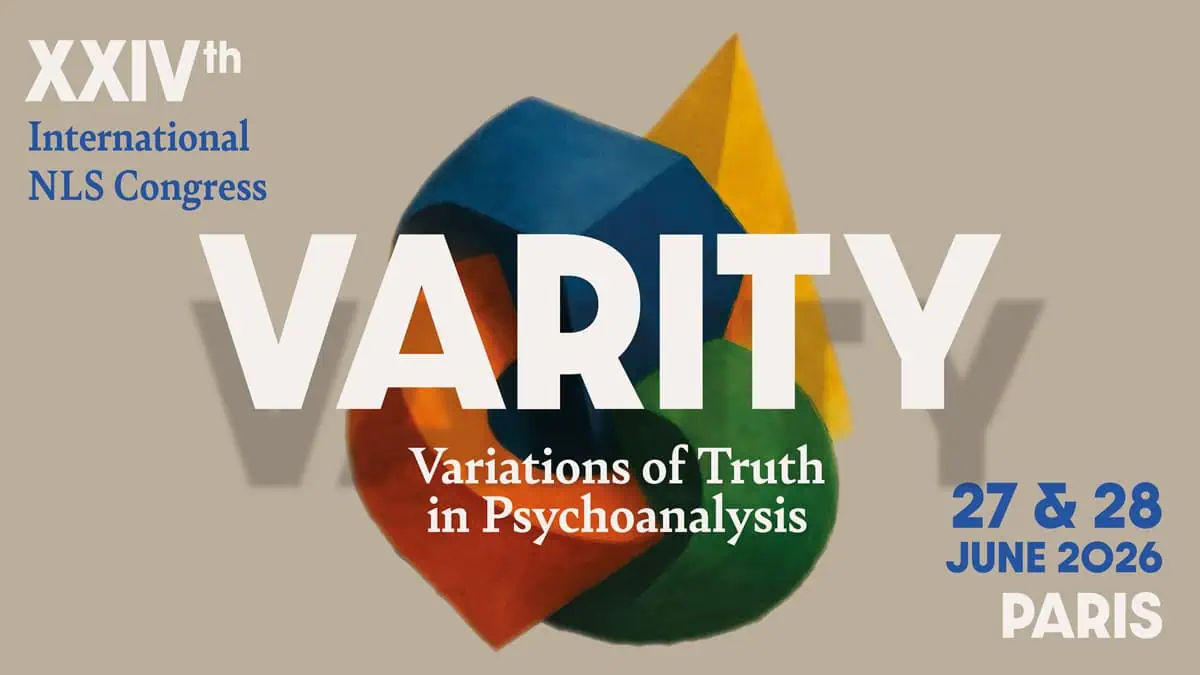
Freud in his text Constructions in Psychoanalysis[1] questions the kind of truth at stake in psychoanalysis. He suggests that psychoanalysts do not hesitate to construct, to add, and yes, even to guess. He relays that even a “wrong” construction (in terms of the outer reality of society) can lead to a piece of truth in psychic reality and that analysts should not be afraid to be wrong, because by sticking with the analytic directive and in giving priority to the words of the patient, the worst that can happen is that the construction will not have an effect. Giving priority to the words of the patient is an important remark, because today it does not go without saying in many “psychoanalytically orientated” psychotherapies, and even in some “psychoanalytic orientations” where the experience of the analyst and his feelings are the sensor of “truth” in the analysand!
Freud’s suggestion is found in the logic of his discovery at the beginning of psychoanalysis, that the “lie” of the hysteric is a sign of a truth in the unconscious. This brought him to demand his patients to speak about everything that comes to mind, so we can say, to go on with the lie in order that a truth can arise.
This enabled him to discover the historical truth in madness, to find the truth hidden in “distortions”, the truth of culture in myths, and to invent a new ethics of psychoanalysis, not only a technique. In this ethic, the lie is not the opposite of truth, as Patricia Bosquin-Caroz states[2], and it gives madness the same structural place as any construction and any scientific theory. This is nothing less than an anti-segregative revolution. All this but under one condition: only as long as the striving for truth exists[3], and it is not relinquished. In postmodern society, where the conscious lie is called “alternative truth”, this is threatened and emphasises once again the role of psychoanalysis by its striving toward truth as a subversive force.
- Freud, S., “Constructions in Analysis” (1937), The Standard Edition of the Complete Psychological Works of Sigmund Freud, Vol. XXIII, London: Hogarth Press, 1964, pp. 255–269. ↑
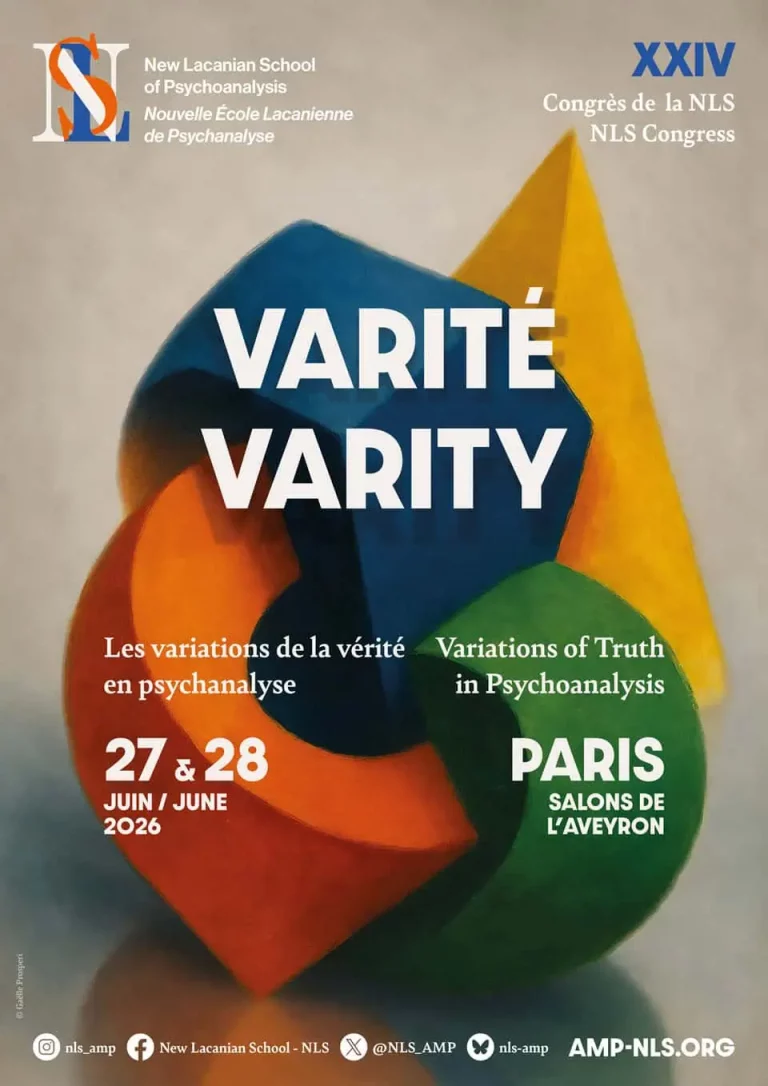
- Bosquin-Caroz, P., “Varity: Variations on Truth in Psychoanalyses.” Presentation of the NLS Congress Theme 2026, p.6. Available at :https://www.amp-nls.org/wp-content/uploads/2025/07/ARGUMENT-NLS-CONGRESS-2026-PBC.pdf ↑
- Miller J.-A., “Pass Bis”, Psychoanalytical Notebooks,17, 2007, p. 100. ↑