Text first published in Hebdo-blog, a publication of the ECF, the ACF and the CPCT, June 2026.
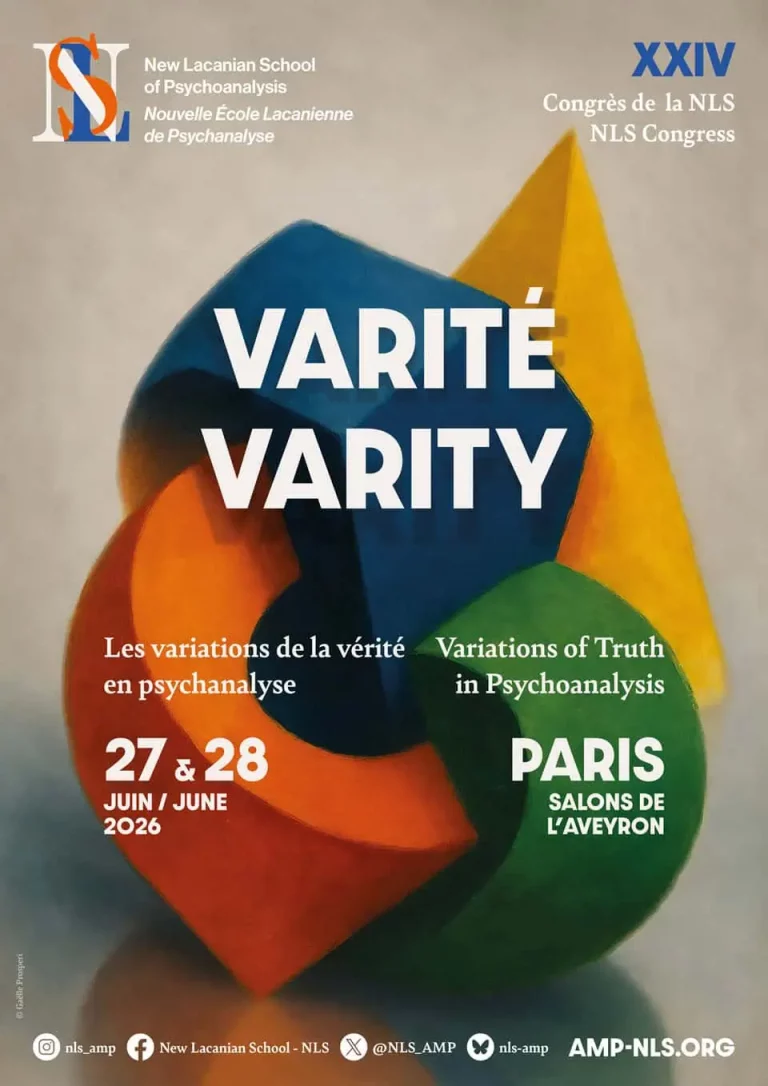
The 24th Congress of the NLS[1] will soon unite members of the School’s twenty-two groups, based mainly in Europe but also on other continents, as well as a wider audience interested in psychoanalysis. Like the NLS, its the congress is bilingual in French and English. It provides the opportunity of combining the epistemic work that has been elaborated throughout the year. Furthermore, considerable emphasis is placed on clinical presentations and exchanges between practitioners oriented by the teachings of Freud and Lacan.
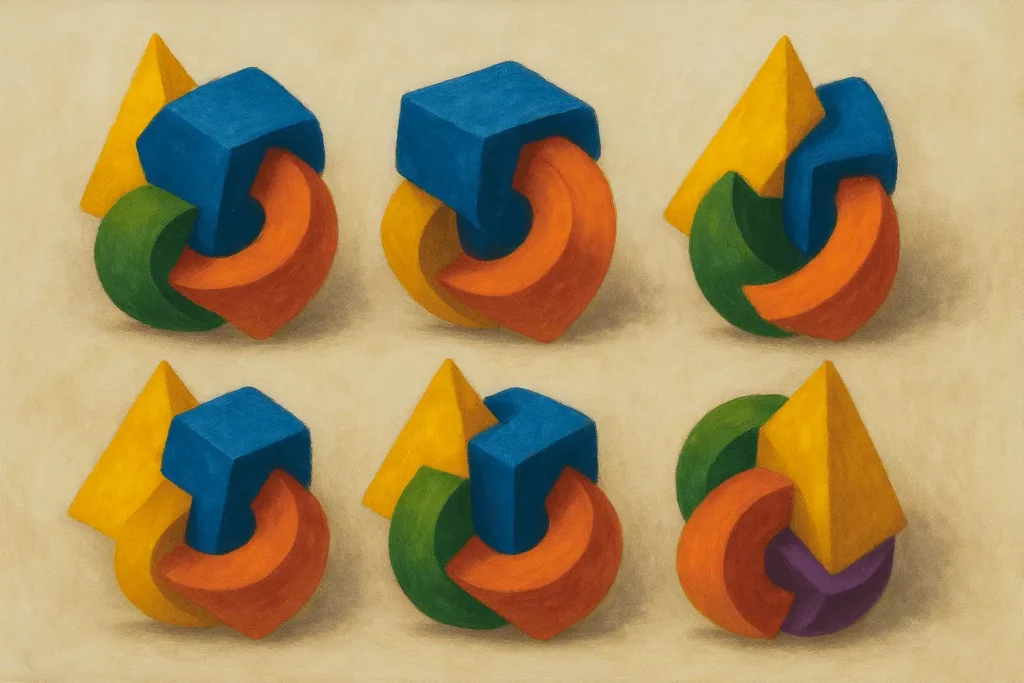
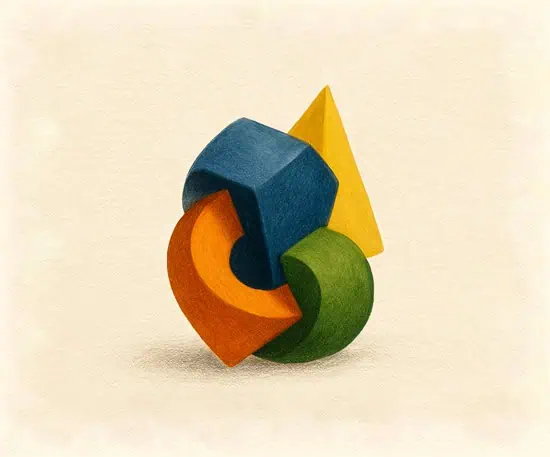
Its theme, “Varity”[2] , explores the variations of truth in psychoanalysis. Lacan coined this neologism by condensing ‘truth’ and ‘variety’. He thus indicates that truth presents itself neither as fixed knowledge nor as a homogeneous block, but in variable forms, through the sudden appearances, displacements and reworkings that punctuate the analytical experience. What the analysand says is not the whole of truth, but a vari(e)ty of the sinthome—that is, a singular form of the symptom in constant transformation.
From the outset, Lacan made a radical distinction between truth and the accuracy of facts. It belongs neither to an objective reality nor to a correspondence between word and thing. It emerges in speech, in the form of partial revelations, caught up in a movement of unveiling and evasion. Analysis thus presents itself as a series of singular revelations, without ever delivering a complete truth. Truth can only be half-said, whilst an irreducible remainder always persists.
Freud had already abandoned the idea of an objective reality of trauma. In the unconscious, this cannot be distinguished from fiction invested with affect. It is therefore not a matter of stating what is, but of making truth out of what has been experienced, including that which could neither be inscribed nor spoken. Analytical truth is not begotten, it is constructed within the experience itself.
Freud had also highlighted another truth, the one that appears where discourse stumbles: in the slip of the tongue, the bungled act or the mistake. The subject always says more than it thinks it says – “truth grabs error by the scruff of the neck in the mistake”[3], writes Lacan.
That said, the conception of truth evolves throughout Lacan’s teaching. Initially conceived as that towards which analysis progresses through the reconstruction of a repressed history, it is subsequently linked to knowledge through the formalisation of the discourses. What presents itself as truth is embedded within a signifying chain. But this knowledge encounters a limit: it does not touch the real of jouissance.
Lacan eventually introduced the dimension of the lying truth. Language cannot say the real; it can only trace its contours. Effects of revelation line the analytical journey until it reaches a stopping point, jouissance. From then on, truth becomes an effect, a jolt of meaning, “blank meaning”, with no guarantee of stable signification.
The ideal of a continuous (hi)story is replaced by a discontinuous conception of the analytical experience, made up of flashes, fragments and things that emerge. Truth is no longer one, but variable, unstable and can be revised.
The psychoanalyst’s action, through its punctuations and emphases, takes part in these variations. These cuts displace the coordinates of discourse and produce new effects of truth. There is no ultimate truth, but a singular history, constructed within the transference. A“history”, as Lacan terms it, insofar as it addresses the other through the mode of hysterical intersubjectivity.
In the so-called post-truth era, where the Other of truth has evaporated, psychoanalysis maintains the demand for an ethical relationship to speech and truth, not as a totality or as a certainty, but as an experience. To put it another way, whilst truth may disappear as a dimension, it subsists as a place – “demansion”, as Lacan suggests, making us hear the “dwelling place”[4] – where something can take place. The aim of this congress will be to sustain this orientation: to substantiate the fact that truth, even when variable and lying, remains that which engages the subject in speech.
- Paris, this coming 27 and 28 June. ↑
- See Lacan, J., Le séminaire, livre XXIV, L’insu que sait de l’une-bévue s’aile à mourre, lecon 19 avril 1977, unpublished. ↑
- Lacan, J., The Seminar, Book I, Freud’s Papers on Technique, text edited by J.-A. Miller, trans. J. Forrester, New York/London: Norton, 1988, p. 265. ↑
- Lacan, J., The Seminar, Book XVIII, On a Discourse That Might Not Be a Semblance, text edited by J.-A. Miller, trans. B. Fink, Cambridge, Polity, 2025, p. 51. ↑